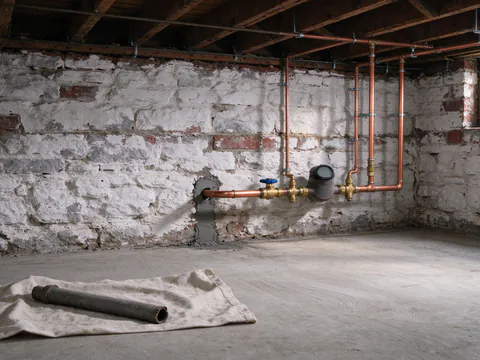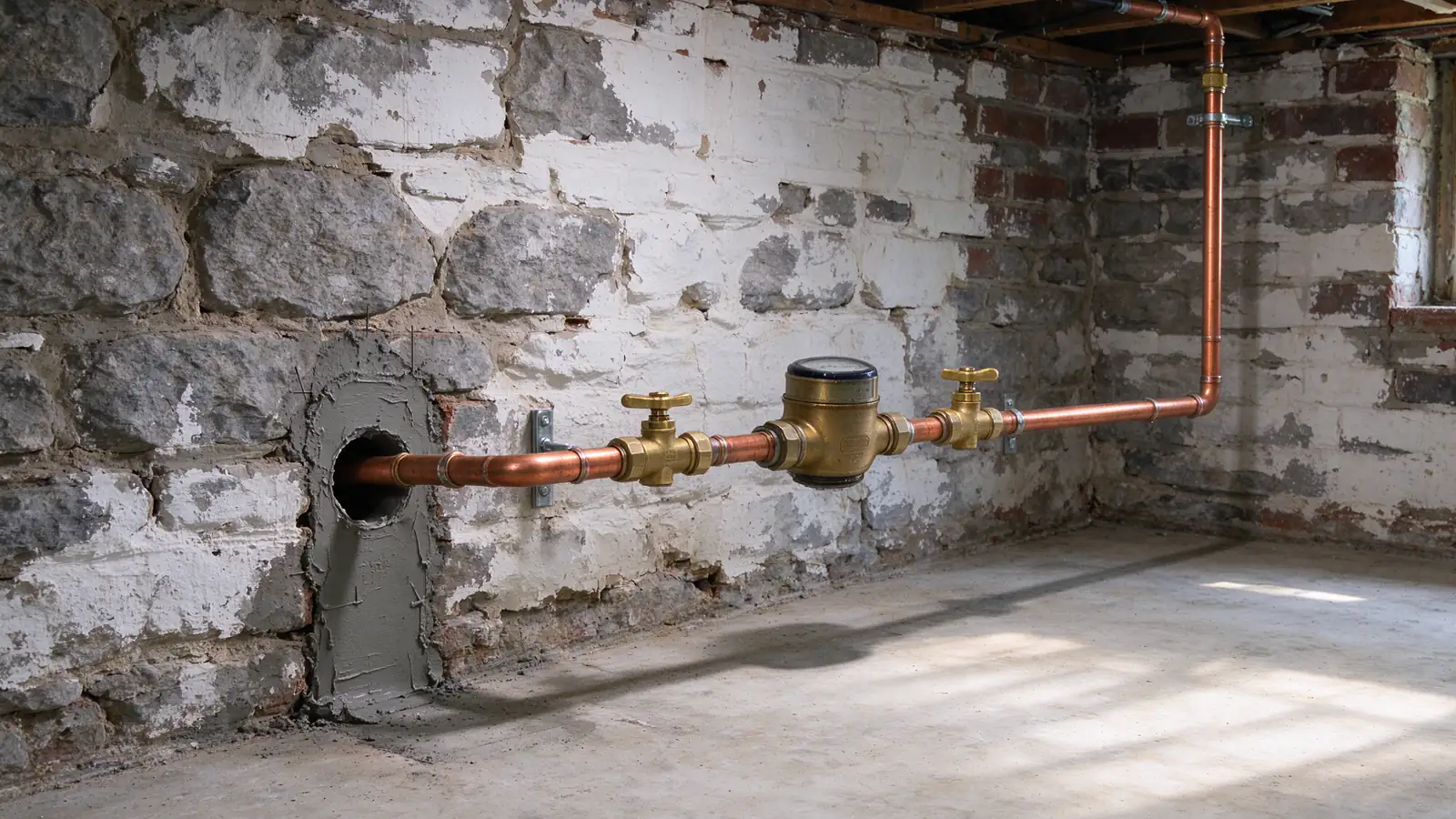
In Philadelphia, the property owner owns the entire water service line: from the ferrule where it taps the water main under the street, through the curb stop near the curb, under the sidewalk and through the front wall to the meter. The Philadelphia Water Department owns the main. Everything after the ferrule, and all piping inside the house, is the owner’s.
That surprises many owners, because the line runs under a public sidewalk and often under the street. Philadelphia Freedom Repipe offers and manages lead service line replacement and whole-house repiping across Philadelphia and nearby suburbs, and the first question on almost every service line job is this one: whose pipe is it, and therefore who pays, who gets the notice and who decides.
Where the line starts and ends
A Philadelphia water service has four parts, and ownership changes only once, at the very start.
| Part | Where it is | Who owns it in Philadelphia |
|---|---|---|
| Water main | Under the street | Philadelphia Water Department |
| Ferrule | The tap on the main where the service connects | The connection point; owner’s piping starts after it |
| Service line and curb stop | Under the street and sidewalk to a valve near the curb, then on to the house | Property owner |
| Main shutoff and interior piping | Inside the house, starting at the meter behind the front wall | Property owner; meter work needs a PWD permit |
The rule comes from two PWD sources. Its service line page says residential water service lines “are owned entirely by the property owner”, and that the curb stop “remains part of your service line”. PWD’s Rates and Charges put the same rule in regulatory language: the owner, at the owner’s own expense, excavates for the connection, installs all piping after the ferrule, and is responsible for maintaining it afterwards.
Philadelphia’s plumbing code uses a slightly narrower term for part of that pipe. It defines the private water distribution pipe as the pipe from the curb stop or curb line to the structure, privately owned. Both definitions agree on the practical point: there is no City-owned section between the main and your basement wall.
Why ownership matters in practice
Ownership is not a technicality. It settles four things that come up again and again.
Who pays for a leak. If the service line leaks under the sidewalk, the repair is the owner’s cost, including the excavation and the sidewalk. The Water Department estimates that replacing a lead service line with a private plumber costs $3,000 to $12,000, and more when a street opening is needed. The lead service line replacement cost guide breaks that down.
Who gets the notice. When PWD finds a leaking or defective service line, it sends a Notice of Defect to the owner, because the owner is the one responsible for the pipe. The Notice of Defect guide explains what that letter asks for.
Who controls the curb stop. The curb stop is the only shutoff outside the house. Because it is the owner’s valve, a curb stop that is buried, offset or seized is the owner’s problem to solve, which matters any time the main water shutoff inside the house needs replacing. The curb stop guide covers what happens when it will not turn.
Who gives permission. PWD’s replacement programs need the owner’s permission to work on the line. Only the owner can sign up for the pilot or return the authorization form during a water main project.
When the City pays, ownership does not change
Several City programs replace or finance service line work, but none of them turns the line into City property. PWD’s pilot page says plainly that the line remains the owner’s responsibility after replacement. The same applies to lines replaced during water main work. Programs change who pays for one job, not who owns the pipe. The free lead line replacement guide sets out each program, and the PWD HELP loan guide covers the zero-interest loan for owners who pay for the work themselves.
The meter, the main shutoff and the pipes inside
Past the front wall, the question is simpler: everything inside belongs to the owner. The main shutoff, the pipe from the meter to the water heater, the risers and every fixture branch are the house’s own water distribution system. That is the part a repipe replaces, and it is separate work from the service line with a separate permit. In practice, Philadelphia’s L&I permits for service lines describe work “from curbstop to water meter inside home” or “sidewalk to front wall”, and the interior repipe starts where those end.
The meter is the one interior item with a PWD role: connections to the main and meters need PWD permits, separate from the L&I plumbing permit. The guide to old water pipes in Philadelphia homes explains how the service line and the interior piping relate, and why one does not fix the other.
Shared lines between rowhouses
Some older rowhouse blocks once had a service line feeding two houses. Philadelphia’s current code requires each building on a street with a main to have its own connection to the main, and water distribution pipe may not cross an adjoining property line. A common pipe is allowed only on the same deeded property, after the meter, and not under a building. When a shared line is replaced, the replacement follows the current rule, which usually means a separate connection for each house. The rowhouse repiping page covers the same rule inside the house.
How the suburbs draw the line differently
Across the city limit, the utility usually owns more of the line.
- Aqua Pennsylvania says that, typically, the utility-owned section extends from the main in the street to the curb stop, and the customer owns the curb stop into the building. That covers towns such as Upper Darby, Haverford, Abington and Bensalem.
- Pennsylvania American Water, which serves the Norristown area, owns the line from the main to the curb stop, and the owner owns the rest.
Both utilities run programs that replace customer-side lead and galvanized lines at no direct cost. So in the suburbs a leak between the main and the curb stop is usually the utility’s to fix, while the same leak in the city is the owner’s. The service areas page lists which rules apply where.
What to do with this
Start with what is known about your own line. PWD’s online map shows its records for your address, and the lead service line check guide explains how to read it and how to look at the pipe where it enters by the meter. If the line is lead, galvanized or unknown, check whether a City program reaches your block before paying privately. If you are planning an interior repipe, plan the two together so new pipe is not connected to a line about to be dug up. Philadelphia Freedom Repipe replaces service lines and interior piping through licensed and insured contractors; inside the city, a Philadelphia licensed master plumber oversees the job and pulls the L&I permit.