The Homeowner’s Emergency Loan Program, or HELP, is a Philadelphia Water Department loan at 0% interest for the cost of qualifying exterior plumbing work plus the lien fee. It is repaid over 60 months, or longer for TAP or senior-discount customers, with a lien on the property. It does not cover interior piping.
HELP exists because a Philadelphia owner owns the whole water service line, and a leaking or lead line can mean an unplanned bill in the thousands. Philadelphia Freedom Repipe offers and manages lead service line replacement and interior repiping, and this guide explains the loan as PWD describes it, so you can weigh it against paying privately or waiting for a City program. Eligibility and terms are PWD’s to decide; nothing here is a promise that a given property qualifies.
The loan terms
PWD’s HELP program page and its lead service line flyer set out the terms:
| Term | What PWD states |
|---|---|
| Amount | The total cost of the work plus the lien fee; no dollar cap stated |
| Interest | 0%, unless payments are missed, which can bring penalties |
| Repayment | 60 months; 60, 120 or 180 months for owners enrolled in TAP or the senior discount |
| Security | A lien on the property |
| Deadline | None; subject to availability of funds |
The lien is the part to think about most. It means the loan is attached to the property, not just to the owner, so it shows up when the house is sold or refinanced. A five-year interest-free repayment of a service line can be a very good deal, but it is still debt against the house.
Who qualifies
Every HELP loan starts with the same basic conditions. You must be the owner of record of a residential, or primarily residential, property with no more than four units. The property needs an operable water meter, and the water account can be no more than two billing cycles behind, or under a current payment agreement or TAP.
On top of that, the work has to fall into one of two routes:
- A Notice of Defect or violation for the water service line, water supply line, curb trap, main drain or sewer lateral. This is how most owners meet HELP: PWD finds a leak or defect, issues the notice, and HELP is one way to pay for the repair. The Notice of Defect guide explains that process.
- An operable lead service line that the owner chooses to replace. No Notice of Defect is needed for lead. PWD suggests confirming the material through its service line map, and the lead service line check guide explains how to read it.
Note that the second route names lead specifically. Whether a galvanized or unknown line qualifies without a notice is a question for PWD when you apply.
How the process works
PWD inspects the line and gives the cost estimate. That is different from an ordinary private job, where the owner collects quotes from plumbers. The PWD regulation behind HELP requires the owner to give access to “the City and/or its contractors” to inspect and make the repairs, which reads as the program arranging the work rather than the owner hiring a plumber of choice. If you already have a plumber you want to use, ask PWD at the start how the job will be assigned for your property before assuming either way.
PWD’s own rates list a $175 charge for a water service line investigation, charged regardless of the result. Whether that applies to a given HELP case is PWD’s to confirm.
What HELP does not cover
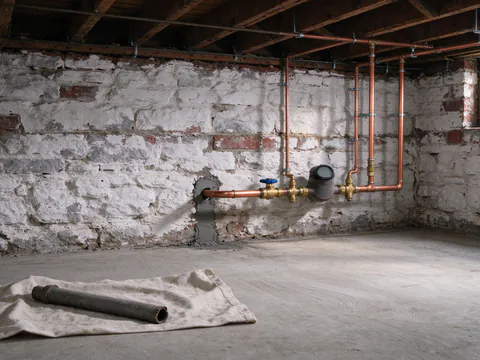
HELP is an exterior program. It pays for the pipe between the main and the house, and on the sewer side the lateral and main drain, when those are named in a notice or the water line is lead. It does not pay for the supply piping inside the house: the main along the basement, the risers and the branches to each fixture. No City, state or federal program was found that pays for an interior repipe; the repiping cost guide covers that side.
It also helps to keep water and sewer apart. A Notice of Defect can name the sewer lateral or main drain, and HELP can finance that too, but that is drain work, not water piping, and it needs a different kind of contractor. The does repiping include drains guide explains where the line falls.
HELP compared with the other routes
Before taking a loan, check whether the line can be replaced for free. PWD’s service line replacement pilot replaces lead and galvanized lines at no charge for eligible properties in named ZIP codes, PWD replaces lines on blocks receiving new water mains, and the Philadelphia Housing Development Corporation’s Basic Systems Repair Program can repair leaking or broken service lines free for owner-occupied homes that meet its limits. The free lead line replacement guide compares them.
| Route | Who pays | Who arranges the work |
|---|---|---|
| HELP loan | The owner, interest-free over time, with a lien | PWD inspects and estimates; City and/or its contractors |
| Pilot program or main work | PWD, for eligible properties | Plumbers or contractors hired by PWD |
| PHDC Basic Systems Repair | PHDC, for eligible owner-occupants | Arranged by PHDC |
| Private replacement | The owner, up front | The owner hires a licensed plumber |
The trade-off with a private job is control and timing. A private replacement means paying up front, PWD estimates $3,000 to $12,000 for a private plumber, but the owner chooses the contractor, reviews the scope and sets the schedule. The lead service line replacement cost guide shows what that price covers.
Planning the interior at the same time
If the service line is being replaced under HELP and the house still has galvanized piping inside, it is worth knowing when the outside work will happen. The interior repipe starts at the meter and main shutoff, which is exactly where the new service line ends. Coordinating the two avoids opening the basement wall twice or connecting new pipe to an old shutoff. Philadelphia Freedom Repipe plans whole-house repiping from the meter up, with licensed and insured contractors; inside the city, a Philadelphia licensed master plumber oversees the job and pulls the L&I permit. The who owns the water line guide shows where each job begins and ends.