When to look at the pipes
What usually starts the conversation
A stain on the ceiling under the bathroom
Supply pipe holds pressure all day, so a small drip inside a wall keeps going until someone sees the stain. On old galvanized pipe the threaded joints rust through first, which is why one leak raises the question of the rest.
The second-floor shower fades
Galvanized steel narrows from the inside as rust and scale build up, and the top floor feels it first. A half-closed valve, the service line or a worn fixture can do the same thing, so pressure and flow get measured before anyone blames the pipe.
Brown water at the first draw
Rust-colored water after the house sits, or only on the hot side, can come from corroding steel pipe. It can also come from the water heater or work on the street main, which is why the source is traced before a repipe is proposed.
An inspection or a remodel found old pipe
A buyer's inspection notes galvanized supply pipe, or a kitchen gut opens a wall and finds it. With walls already open, the old lines are easier to reach now than they will be after the new plaster and tile go up.
Services
Repiping work, by what the house needs
Most jobs are whole-house repipes of the hot and cold supply lines. Some houses only need one floor, one bathroom group or the galvanized sections that are left, and the first visit decides which.
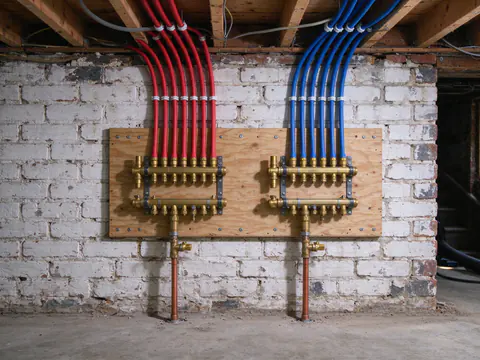
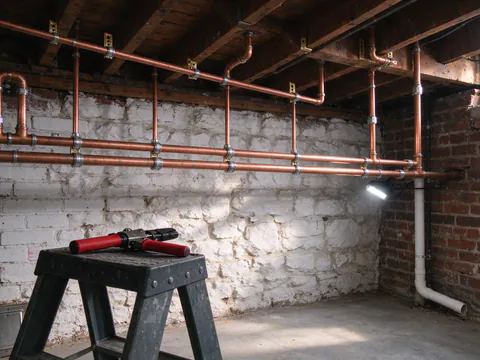
Copper repiping
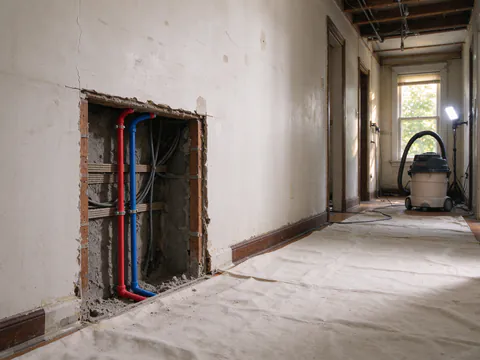
Rigid copper supply lines for mixed-use buildings and other occupancies where Philadelphia requires metal, and for houses whose owners choose it, joined by press or solder with care around old framing.
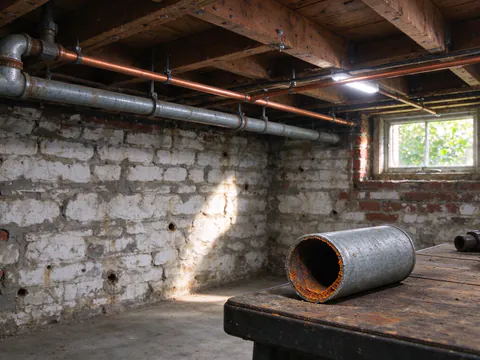
Galvanized pipe replacement
Corroded steel water lines taken out of service, replaced in PEX or copper, joined to anything that stays with a listed transition, then flushed so loosened scale does not end up in the faucets.
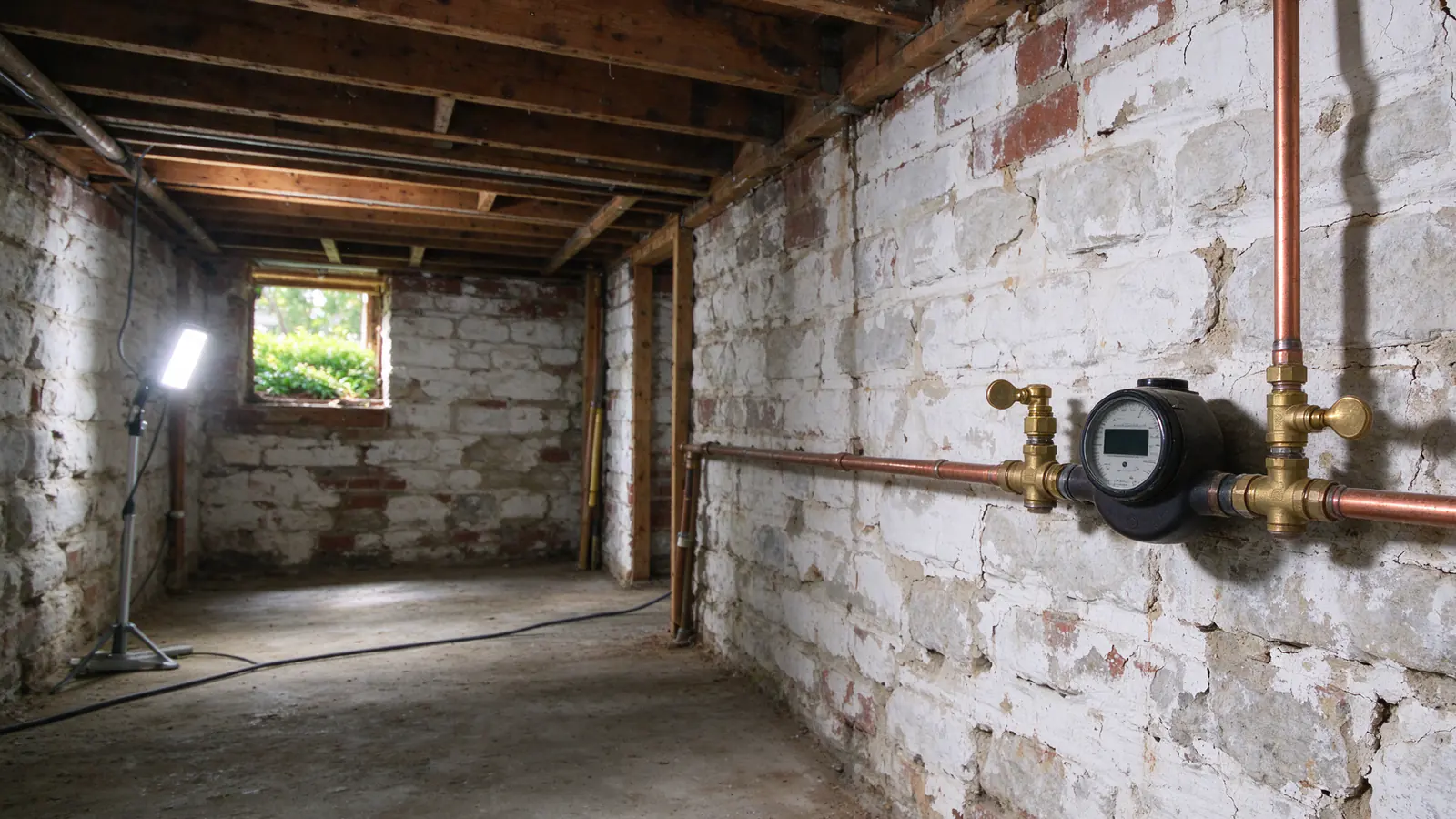
Rowhouse repiping
A repipe planned around the rowhouse itself: a service through the front wall, a long narrow basement, party walls on both sides and a bathroom one floor up.
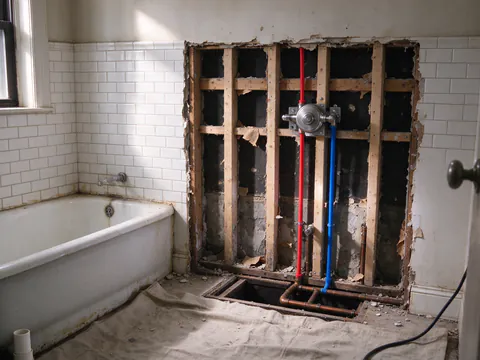
Partial repiping
Part of the supply system replaced, such as one bathroom group, one riser, the basement main or the hot side, with a written boundary and a list of the old pipe that stays.
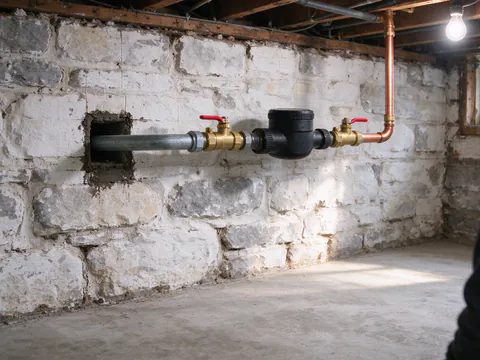
Main shutoff replacement
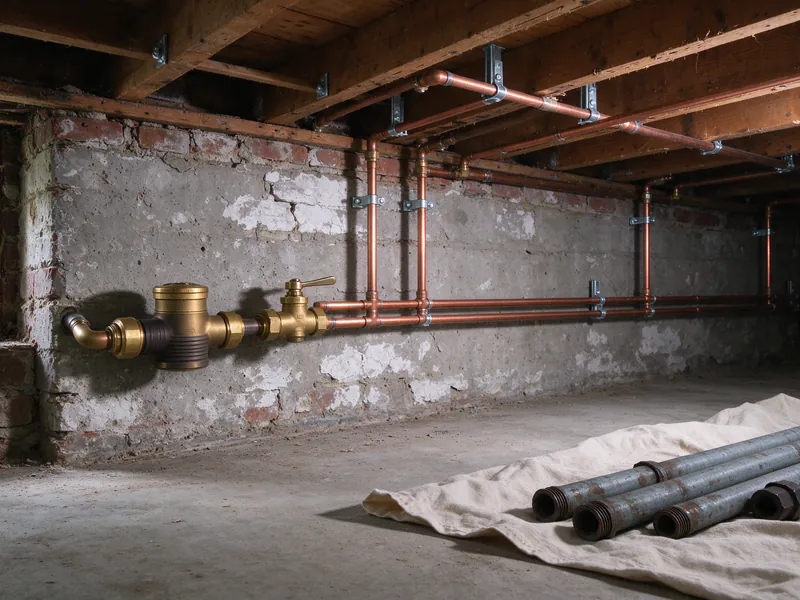
A seized or leaking main shutoff at the meter replaced with a valve that closes, plus the meter-area valves and the short main line from the foundation wall where they need it.
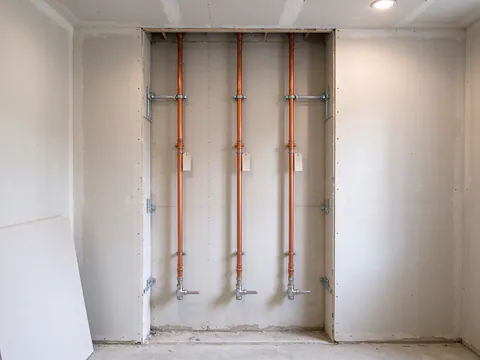
Multi-unit repiping
Supply risers and the branches into each apartment replaced one stack at a time, with water-off windows planned around the people living there and the material the code allows for the building.
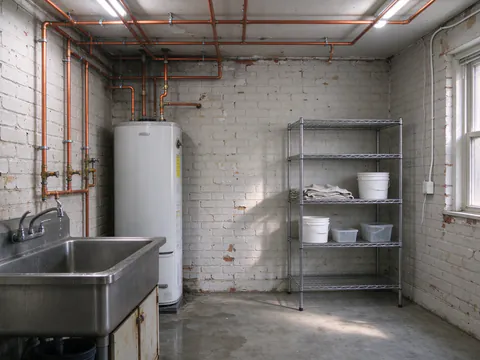
Commercial repiping
Water supply piping in stores, offices, restaurants and mixed-use corner buildings replaced in the metallic pipe the Philadelphia code requires, scheduled around business hours.
Lead service line replacement
The water service line from the main in the street to the meter inside the house, replaced when it is lead or galvanized, with the L&I permit, PWD connection and sidewalk restoration planned in one scope.
How the work is planned
What you can check before anyone opens a wall
Price ranges published up front
Typical Philadelphia-area repipe ranges and the City's permit fees are on this site, with the reasons a house lands high or low. A written quote for your house comes after the walk-through, not before.
Pipe matched to the Philadelphia code
PEX is allowed for water piping in one- and two-family dwellings and apartments. Other occupancies, such as a store on the ground floor, need metallic pipe. The material on the quote follows the building, not habit.
Pressure tested before the walls close
Every new line is pressure tested with the fixtures isolated, so a weak joint shows on a gauge instead of behind fresh plaster. The system is flushed after the cutover to clear debris and loosened scale.
Openings planned around plaster
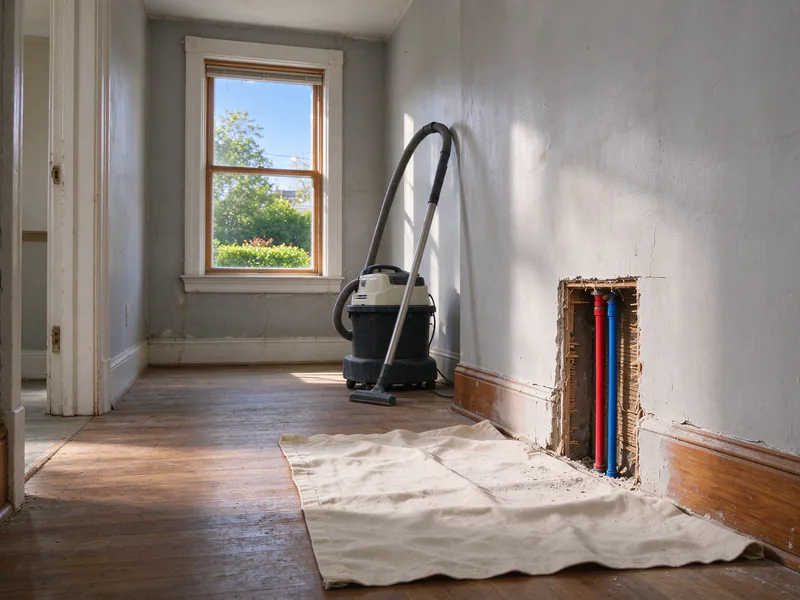
New pipe has to reach every fixture, so some walls will open. The route uses basement joists, stacked closets and the backs of cabinets first, and the quote lists each opening and who closes it.
How a repipe runs
From the first call to the last inspection
First call
You describe the house: rowhouse, twin or detached, how many floors and bathrooms, what the pipe looks like where you can see it, and what made you call. That sets up the walk-through.
Assessment
The walk-through starts at the meter and main shutoff, traces the pipe up every floor, checks pressure and flow, and maps the routes and the openings. You get a written scope that says what is replaced and what stays.
The work
A licensed master plumber pulls the L&I permit. New lines go in while the old ones keep the house running, then each section is cut over during a planned water-off window.
Completion
The new piping is pressure tested and inspected, then flushed. Shutoffs are labeled, openings are closed to the finish the quote names, and you get a list of anything old that stayed in service.
Leaks, rusty water or a weak upstairs shower? Start with a walk-through from the meter up.
Typical costs
What a repipe typically costs around Philadelphia
A typical Philadelphia-area range for the hot and cold supply piping in a single-family house or rowhouse, PEX or copper. Larger homes and copper jobs can pass $20,000.
- House size and number of floors
- Fixture count
- Pipe material
- Plaster, tile and cabinets in the way
- Number of wall openings and the patch and paint scope
About what a typical home repiped in PEX runs across the Philadelphia area. Large homes run higher.
- House size and fixture count
- Floors the pipe climbs
- Basement and crawlspace access
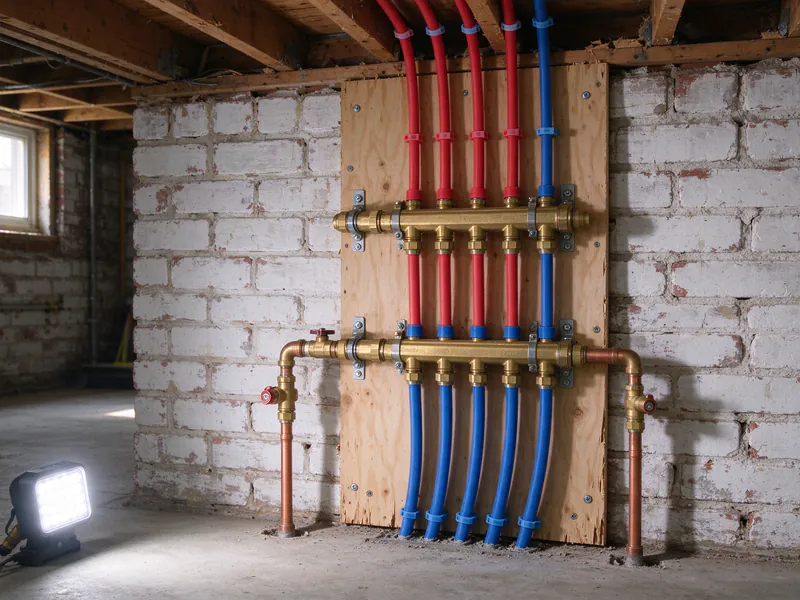
- Manifold or trunk-and-branch layout
L&I plumbing permit for alterations in a one- or two-family dwelling: $50 for the first 7 fixtures and $22.50 for each one after that. L&I also lists a $100 filing fee applied toward the final fee, a $3 city surcharge, a $4.50 state surcharge and $4 per plan for record retention.
These are typical ranges, not quotes, and no price is fixed before someone has walked the house. Partial repipes vary too much by scope for a fair range; they are priced from the fixtures and openings involved. Try the repipe cost estimator.
Get an estimate
Tell us about the house
Describe the building, the floors and bathrooms, and what you are seeing: leaks, low flow upstairs or discolored water. The walk-through that follows traces the pipe from the meter up and ends with a written scope.
Choosing the scope
Spot repair, partial repipe or the whole house
| Spot repair | Partial repipe | Whole-house repipe | |
|---|---|---|---|
| What it replaces | One leaking section or fitting | A defined part of the system, such as one floor, one riser or one bathroom group | Every hot and cold supply line from the main shutoff to the fixtures |
| When it fits | Pipe on both sides of the leak is sound | The trouble is confined to one area and the rest tests sound | Old pipe is failing in more than one place, or galvanized runs throughout |
| What stays old | Everything else | Everything outside the boundary, joined with a listed transition | Nothing in the supply system, apart from any lines the quote names |
| Wall openings | One, at the leak | Along the replaced section | Planned along every route, listed on the quote |
| L&I permit | Not needed for minor same-material repairs or stopping a leak | Usually needed; L&I decides which fee line applies | Needed; $50 for the first 7 fixtures in a one- or two-family dwelling, plus $22.50 each after |
| Typical cost | Priced for the one repair | Priced from the fixtures and openings in the scope | $4,000 to $15,000+ around Philadelphia |
Service areas
Philadelphia and the nearby Pennsylvania suburbs
Repiping across Philadelphia and nearby Delaware, Montgomery and Bucks County communities. Inside the city, L&I and the Philadelphia Plumbing Code set the rules; in the suburbs, each township enforces the statewide code and keeps its own permit and contractor requirements.
| Area | Permit office | Water utility | Pipe material rule | Notes |
|---|---|---|---|---|
| Cheltenham | Cheltenham Township Building, Zoning and Codes | Aqua Pennsylvania | Pennsylvania Uniform Construction Code (2021 IPC) with Township Code Chapter 209, Plumbing Standards | n/a |
| Norristown | Municipality of Norristown (code enforcement and permits) | Pennsylvania American Water | Pennsylvania Uniform Construction Code (2021 IPC, effective January 1, 2026) | n/a |
| North Philadelphia | Department of Licenses and Inspections (L&I) | Philadelphia Water Department | Philadelphia Plumbing Code (2018, based on the 2018 IPC with local amendments) | n/a |
| South Philadelphia | Department of Licenses and Inspections (L&I) | Philadelphia Water Department | Philadelphia Plumbing Code (2018, based on the 2018 IPC with local amendments) | n/a |
| Upper Darby | Upper Darby Township plumbing permits | Aqua Pennsylvania | Pennsylvania Uniform Construction Code (2021 IPC, effective January 1, 2026) | n/a |
| West and Southwest Philadelphia | Department of Licenses and Inspections (L&I) | Philadelphia Water Department | Philadelphia Plumbing Code (2018, based on the 2018 IPC with local amendments) | n/a |
Repiping questions from Philadelphia homeowners
Is PEX allowed for repiping a house in Philadelphia?
Yes, in one- and two-family dwellings and apartments. The Philadelphia Plumbing Code requires metallic water piping only in other occupancies, such as a store or office, and in buildings with an occupied floor more than 75 feet up. L&I permit records bear this out: of 52 whole-house water piping replacements permitted over three years, 32 named PEX.
Do I need a permit to repipe a house in Philadelphia?
Yes. L&I requires a plumbing permit for replacement and repair work, and only minor same-material repairs and stopping a leak are exempt. A repipe in a building with four or fewer dwellings and up to four stories can usually go through the EZ permit, without plans. A licensed master plumber has to oversee the work.
Who is allowed to do plumbing work in a Philadelphia house?
A Philadelphia licensed master plumber has to oversee it. To hold that license, the plumber needs a year as a registered Philadelphia journeyman or equivalent, must pass the Philadelphia Master Plumber Examination, stay current on City taxes and carry set insurance minimums. A property owner may file the permit application, but the master plumber's oversight is still required.
How much does it cost to repipe a house around Philadelphia?
A whole-house repipe of a single-family house or rowhouse typically runs $4,000 to $15,000+ around Philadelphia, and larger homes and copper jobs can pass $20,000. A PEX repipe of a typical home runs about $4,000 to $10,000. Fixture count, floors, plaster and tile in the way, and the patch scope move a house up or down the range.
Will a repipe fix low water pressure upstairs?
Only when the old pipe is what restricts the flow. Galvanized steel narrows as it corrodes inside, and replacing it restores the bore. But a partly closed main shutoff, an old service line, a failing pressure-reducing valve or clogged fixtures cause the same symptom, so pressure and flow are measured at the meter and the top floor before a repipe is proposed.
How much plaster gets opened during a repipe?
Less than most people expect, but never none. New pipe has to reach every fixture, so the plan uses open basement joists, stacked closets and the backs of cabinets first, then cuts small rectangles in the plaster where a turn or fitting has to be made. A good quote lists each opening and says who closes it and to what finish.
Can we stay in the house while it is repiped?
Usually, yes. The new lines are run while the old ones keep supplying the house, and the water is shut off only while each section is cut over. How long and how often depends on the fixtures, floors and inspection timing, so the quote should name the water-off windows in advance and say which rooms will be work areas.
How common are old galvanized pipes in Philadelphia houses?
No public count exists for galvanized pipe inside Philadelphia homes, because permit records rarely name the pipe being removed. The housing stock points the same way, though: by Census figures, 39.9% of the city's housing units were built in 1939 or earlier and the median year built is 1949, from the era when galvanized steel was a common supply pipe.
Does a whole-house repipe replace the water line from the street?
No. A repipe starts at the main shutoff inside the house. In Philadelphia the owner owns the service line from the ferrule at the water main to the house, and replacing it is a separate job with its own permits. The Philadelphia Water Department runs separate programs for lead and galvanized service lines, covered on the lead service line page.
Does repiping include the drain and sewer pipes?
No. Repiping replaces the pressurized hot and cold water supply lines. Drains, vents and the sewer lateral are a separate system with their own failure patterns and their own scope. If a quote includes drain work, it should say so line by line, and if it does not, nothing below the sinks and toilets is being replaced.
Can PEX connect straight to the water heater in Philadelphia?
No. Philadelphia's EZ permit standards call for at least 4 feet of developed length of copper or similar metallic pipe at both the water heater's inlet and outlet. Where a pressure-reducing valve, check valve or backflow assembly sits on the incoming supply, thermal expansion control is also required. A PEX repipe meets the heater through that metallic section.
Can a rowhouse share a water pipe with the house next door?
Not under the current Philadelphia code. Water distribution pipe may not cross adjoining property lines, and each building on a street with a water main needs its own connection to the public main. A common pipe is allowed only on the same deeded property, after the meter. If a repipe turns up a shared line, the fix runs through the Water Department's connection rules, not just the interior piping.
Ready to find out what your pipes need?
A walk-through from the meter up shows what the pipe is on every floor, where the routes run and which walls would open. You get a written scope and price before any work starts.
Call (267) 214-6117Philadelphia Freedom Repipe1701 Washington Ave, Philadelphia, PA 19146
office@philadelphiafreedomrepipe.com