Start with the Philadelphia Water Department’s online Service Line Material Map, which shows what PWD’s records say about your address. If it says lead, galvanized or incomplete records, look at the pipe where it comes through the wall by your water meter and do the EPA’s scratch and magnet test. PWD says to treat incomplete records as possibly lead.
Most owners who look find no clear answer, because most Philadelphia addresses have no complete record. Philadelphia Freedom Repipe offers and manages lead service line replacement and interior repiping across Philadelphia, and this guide explains how to get from the map to a reasonable answer about your own line, and what that answer does and does not tell you about the pipes inside the house.
Reading the Service Line Material Map
PWD’s Service Line Material Map lets you search an address and see what PWD’s records say about its service line. It exists because federal rules now require water systems to inventory every service line. When PWD launched the map, its published inventory counted:
| Category on the map | Lines at launch | What it means |
|---|---|---|
| Lead | 14,272 | Records show lead |
| Galvanized | 1,189 | Records show galvanized steel |
| Non-lead | 73,373 | Likely plastic or copper, by PWD’s description |
| Unknown, now incomplete records | 436,341 | Not enough information to say |
Those were the counts in PWD’s announcement when the map went live; the map itself is updated as records come in, so it is the place to check for current figures. PWD estimates that about one in 20 Philadelphia properties, or five percent, may have a lead service line.
The striking number is the last one. Most addresses fall into the incomplete category, and owners regularly report finding nothing more useful on the map than that. That is not a failure of the search: it reflects how few records survive for lines laid many decades ago.
What “incomplete records” means for you
PWD says a service line with incomplete records should be treated as if it may contain lead. In practice that means two things. First, take the interim steps PWD recommends for lead lines, such as flushing and certified filters, which the lead in Philadelphia tap water guide covers. Second, try to improve the record. Where the section between the meter and the curb stop has an incomplete record, PWD asks residents to check the pipe and report what they find. PWD does not recommend digging up buried sections to look.
The age of the house is a hint, not an answer. PWD says lead service line installation decreased after the 1950s, and of the city’s housing, 39.9% was built in 1939 or earlier. But many older lines have been partly or wholly replaced, so a hundred-year-old rowhouse may have a newer copper line, and a newer house may still have an old connection.
How to check the pipe at the meter
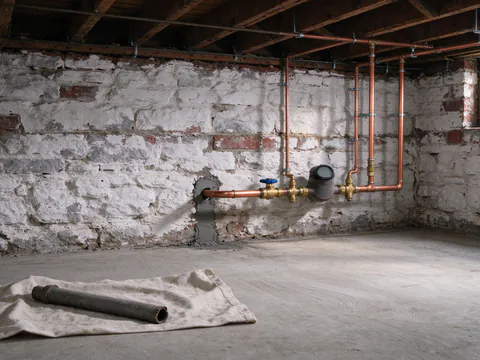
In a typical Philadelphia rowhouse, the service line enters through the basement front wall and meets the water meter just inside. That short exposed stretch is the one place most owners can see. The U.S. Environmental Protection Agency’s Protect Your Tap quick check describes the test:
- Find the pipe coming through the wall into the meter, on the street side of the meter.
- Scratch it gently with a coin or key, through any paint or corrosion. Do not cut into it or scrape hard.
- Hold a magnet to the pipe.
| What you see | Likely material |
|---|---|
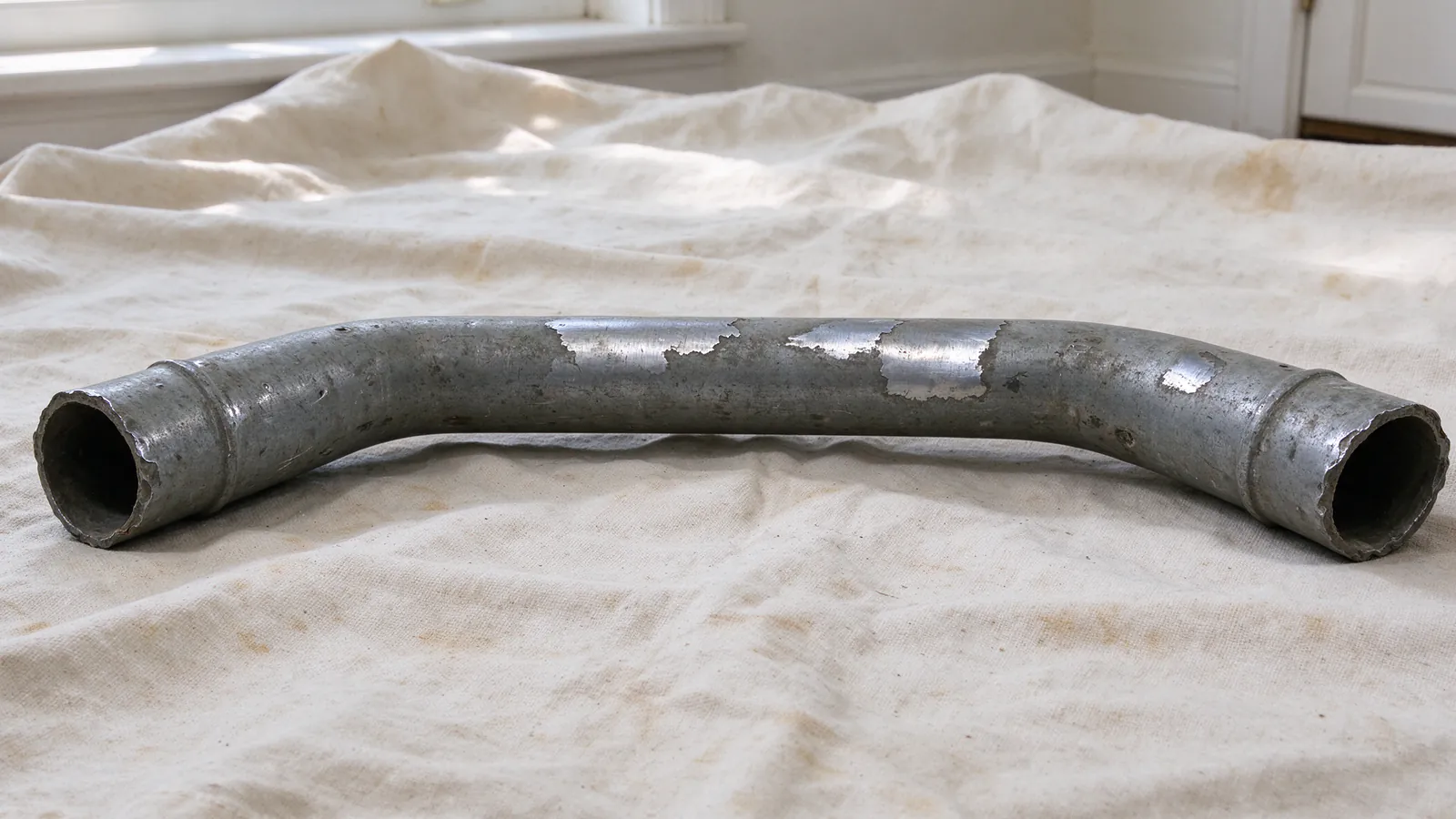
| Soft dull gray, a scratch shows shiny silver, magnet does not stick | Lead |
| Dull gray, scratch stays gray, magnet sticks | Galvanized steel |
| Penny color where scratched, magnet does not stick | Copper |
| White, blue or black plastic | Plastic |
A lead line often has a rounded, bulging joint where it was connected. Do the test on the pipe only, not on the meter or valves, and stop if the pipe is fragile or leaking. The guide to identifying your water pipes describes each material in more detail and applies the same tests to the pipes inside the house.
Why galvanized counts as possibly lead
A galvanized steel line is not made of lead, yet PWD and the federal rules group it with lead lines. PWD explains that over decades, lead from a property’s plumbing can accumulate on the corroded walls of galvanized pipes. A galvanized line that sat downstream of a lead connection for years may hold lead in its scale and release it later. That is why the City’s free replacement routes, described in the free lead line replacement guide, cover galvanized lines too.
The street line and the pipes inside are different questions
The map and the meter test answer one question: what is the service line, the pipe from the main to the meter, made of. They say nothing about the pipe after the meter. A Philadelphia house can have a newer copper service line and galvanized mains and risers inside, or the reverse.
That distinction decides which job is needed:
- A lead or galvanized service line is replaced from the street to the meter, under its own permit, possibly through a City program. The owner owns that line, as the who owns the water line guide explains.
- Galvanized pipe inside the house is the interior question. It narrows with corrosion and can also hold lead from upstream. Replacing it is a galvanized pipe replacement or whole-house repiping job, starting at the meter and main shutoff.
PWD also notes that lead can hide in older plumbing work inside the house: old solder, fittings, faucets and brass. A licensed and insured plumber can inspect the pipes and other plumbing for lead or steel, PWD says.
After you know
If the line is lead or galvanized, check whether a City program reaches your address before paying privately, and look at the PWD HELP loan if you plan to pay for it yourself. If the line is copper or plastic at the meter but the record stays incomplete, keep following PWD’s interim advice and report what you found. Philadelphia Freedom Repipe replaces service lines and interior piping through licensed and insured contractors; inside the city, a Philadelphia licensed master plumber oversees the job and pulls the L&I permit.