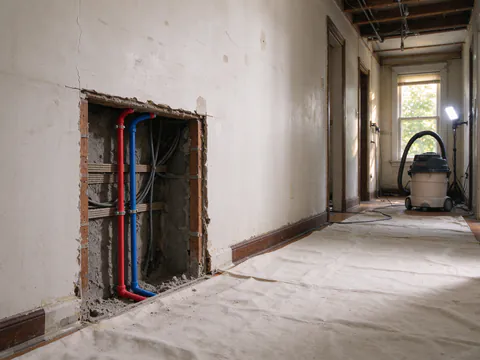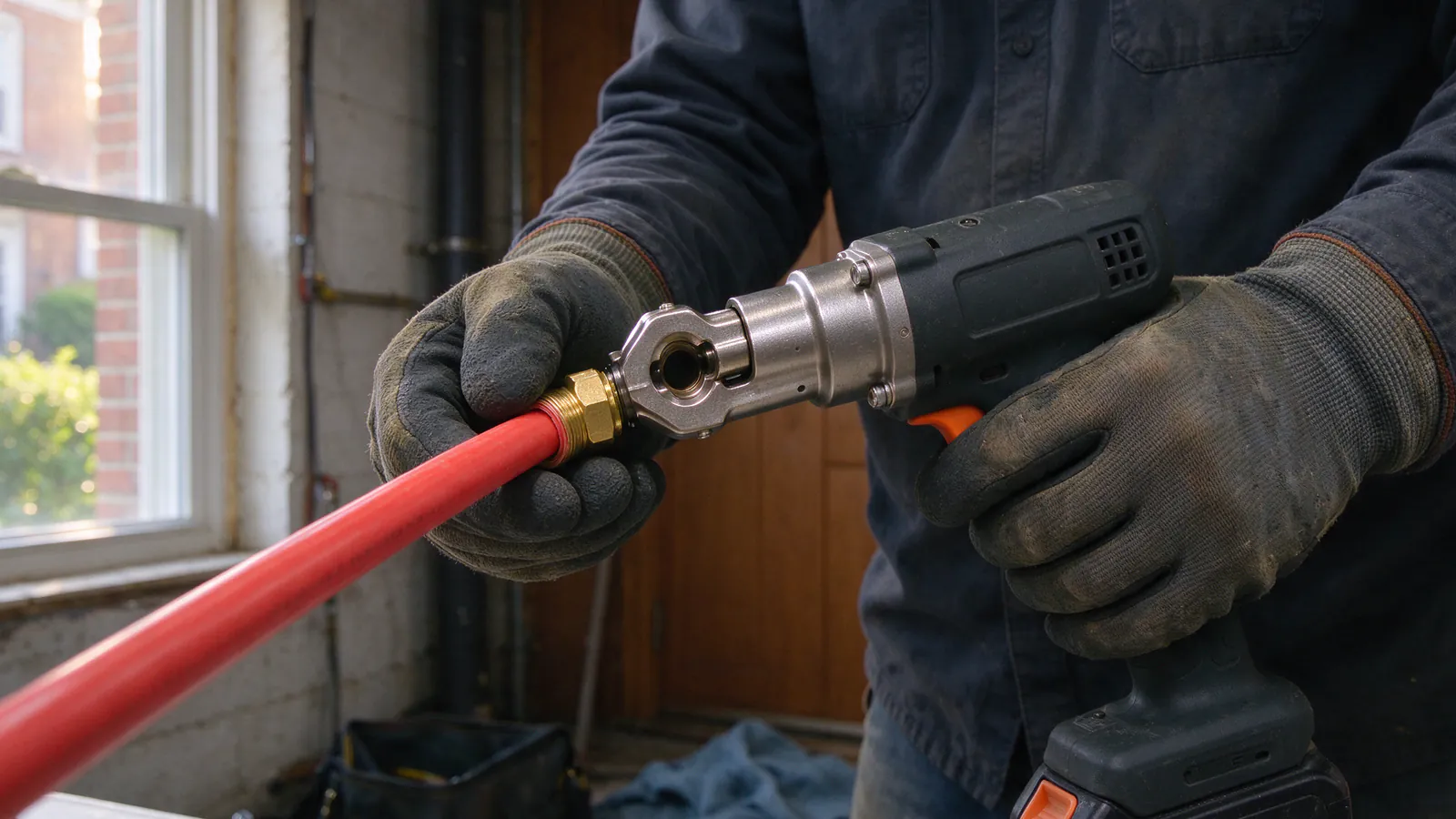
In Philadelphia, plumbing work, including water piping, must be done under a licensed master plumber. Any property owner may apply for the L&I permit, but the work itself is overseen by the master plumber, so a homeowner cannot repipe their own house in the city. A home improvement registration is not a plumbing license. Suburban rules vary by township.
Philadelphia Freedom Repipe offers and manages whole-house repiping across Philadelphia and nearby Delaware, Montgomery and Bucks County suburbs. Licensed and insured contractors carry out the work; inside the city, a Philadelphia licensed master plumber oversees the job and pulls the L&I permit, and in the suburbs each township or borough’s own permit and contractor rules apply. This guide explains what those rules are and why they are drawn where they are.
What the Philadelphia master plumber license requires
The City of Philadelphia licenses plumbers itself. L&I’s master plumber license page says plumbing work needs to be done by a licensed master plumber, and that covers water piping. To get the license, a plumber needs:
- one year as a registered Philadelphia journeyman plumber, or equivalent experience approved by L&I;
- a passing grade on the Philadelphia Master Plumber Examination, which is administered by the International Code Council;
- City tax compliance;
- insurance at or above the City’s minimums: general liability of $500,000 per occurrence, auto liability of $300,000, and workers’ compensation at $100,000, $100,000 and $500,000.
The insurance minimums matter to a homeowner as much as the exam. They mean the license holder carries coverage if a job damages the house or someone is hurt on it. L&I’s EZ permit standards forms carry the registered master plumber’s number and signature, which ties every permitted job to one accountable license.
Where journeymen fit
A journeyman plumber is a registered, experienced tradesperson who works under a master plumber. Most hands-on work on a large repipe may be done by journeymen and helpers; the master plumber is the one who answers to L&I for it. The license structure is a ladder, not a list of interchangeable credentials, which is why the permit names the master plumber rather than whoever is holding the tools that day.
Plumbing licenses in Pennsylvania
People often ask whether residential plumbers in Pennsylvania have a license. Around Philadelphia, the license that matters is issued locally, by the city or by the township or borough where the house sits, rather than by one license that works everywhere. Philadelphia licenses master and journeyman plumbers. Cheltenham licenses master plumbers, journeymen and apprentices under its own plumbing code. Abington requires plumbing permit applications to be submitted by a master plumber or journeyman registered with the township. Norristown keeps its own licensed-contractor list, with a residential contractor license covering plumbing in single-family dwellings and duplexes and a master plumber license for non-residential work.
The practical step is to ask which local license a plumber holds for the municipality where the house is, not whether they are licensed in general.
Why HIC registration is not a plumbing license
Pennsylvania’s Home Improvement Contractor registration, held with the state Attorney General, registers a business to do home improvement work. It is not an exam in plumbing and it does not grant the right to do plumbing. Norristown’s licensed-contractor list makes the point directly, warning that its license should not be confused with the state HIC registration.
So a contractor with an HIC number but no plumbing license can manage a kitchen or bath renovation, but in Philadelphia the water piping in that renovation, even a partial repipe of one bathroom group, has to be overseen by a licensed master plumber under an L&I permit. That is the answer to the common question of what an HIC-registered contractor is allowed to do in Philadelphia: the carpentry, finishes and coordination, with the plumbing under a master plumber.
What a homeowner can and cannot do
In the city, L&I lets any property owner or their authorized agent apply for a plumbing permit, but a licensed master plumber must oversee the work, so a homeowner cannot permit and carry out their own repipe. Homeowners who plan to do part of the job themselves often worry about what an inspector will make of it. In Philadelphia the question is settled before the inspector arrives: water piping is master plumber work.
What the owner does control is the decision. The owner chooses the plumber, agrees the scope, and is responsible for the water service line, which the Philadelphia Water Department says is owned entirely by the property owner. When PWD issues a Notice of Defect for a leaking line, it states that all work must be performed by a licensed plumber. The who owns the water line guide explains where the owner’s responsibility starts.
How the suburbs handle it
Suburban townships enforce the Pennsylvania Uniform Construction Code and set their own contractor rules. Upper Darby is the clearest example. Its plumbing permits may only be applied for by properly authorized and licensed people: residential contractors with a state HIC registration verified by the township plus a township business privilege license, licensed plumbing contractors, or property owners in limited cases, only for an owner-occupied primary residence and not a rental or investment property. The Upper Darby repiping page covers the rest of the township’s rules.
Other townships are stricter or looser in different ways, which is why a suburban repipe is planned around the specific municipality. The Philadelphia repipe permit guide covers the city permit in detail, and the repiping cost guide explains why licensed labor in the region costs what it does.