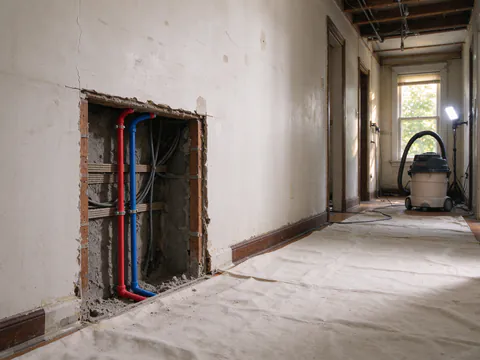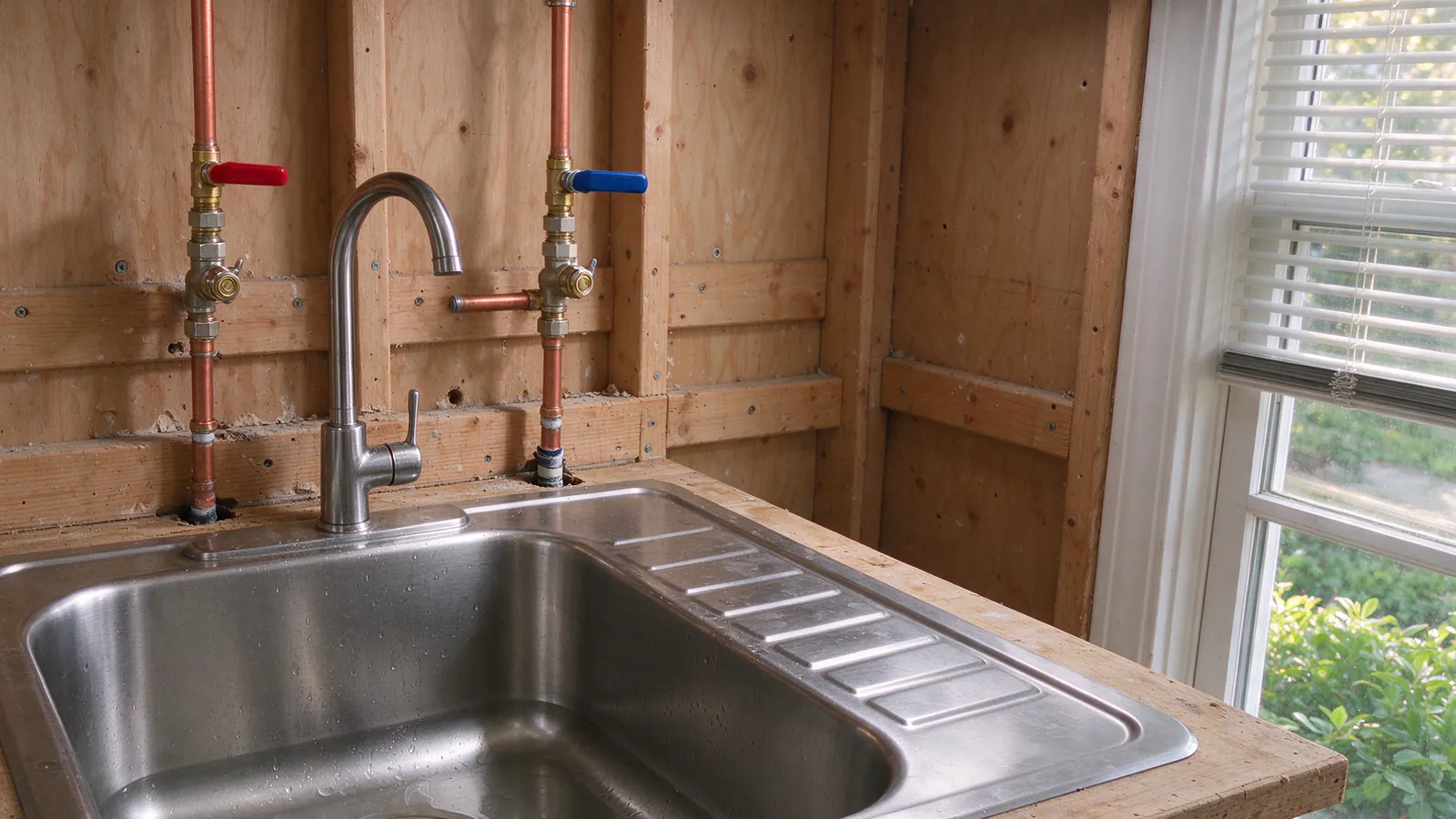
No. A repipe replaces the water supply piping, the pressurized hot and cold lines that bring water to your fixtures. Drain, waste and vent pipes, which carry water away, and the sewer lateral that runs from the house to the street sewer, are a separate system. They are built from different materials, work by gravity rather than pressure, and are repaired by a different scope of work.
Philadelphia Freedom Repipe replaces water supply piping in Philadelphia and nearby Delaware, Montgomery and Bucks County suburbs. It does not offer drain, waste, vent or sewer lateral work; that belongs to contractors who do drain and sewer jobs. This guide explains where the boundary sits, so a whole-house repiping quote and any drain work you need can be read and scheduled correctly.
Two systems that share the same walls
Every house has two piping systems that look similar from a distance and work in completely different ways.
The supply system is under pressure. Water arrives from the street through the service line, passes the meter and the main shutoff, and travels through small pipes, typically half an inch to an inch, to the water heater and every fixture. Because it is pressurized, it can run uphill, sideways or around corners. A leak in supply pipe sprays or drips continuously, whether or not anything is running.
The drain, waste and vent system is not pressurized. Used water falls by gravity through larger pipes, often three or four inches in the main stack, that must slope steadily downhill toward the sewer. Vent pipes rise through the roof to let air in, so drains flow without gurgling or siphoning the traps under each fixture. A leak in a drain shows up when water runs down it: after a shower, a flush or a load of laundry.
In an old Philadelphia rowhouse the two often run side by side. The cast iron stack rises through the back of the house beside the bathroom, and the supply riser climbs the same chase. That is why the two are easy to confuse, and why it matters to know which one is failing before anyone prices a fix. The guide to identifying your water pipes shows how to tell supply materials apart.
What a repipe replaces, and what it leaves
A supply repipe replaces:
- The main from the main shutoff to the water heater and the rest of the house
- Hot and cold risers and branches to every sink, toilet, tub, shower, laundry box and hose bibb
- Fixture shutoff valves and the connections the piping serves
- The water heater connections, with the metallic section Philadelphia’s EZ permit standards require
It does not replace:
- Drain lines from sinks, tubs and showers, or toilet drains and flanges
- The soil and waste stacks and their cleanouts
- Vent piping up through the roof
- The house drain and sewer lateral from the house to the street sewer
- The water service line from the street to the meter, which is supply pipe but outside a repipe; it has its own permit and is covered on the lead service line replacement page
If a quote for a repipe mentions drains, stacks or the sewer, read it carefully: either it is describing a combined renovation, or the scope is unclear.
Why the systems are separate jobs
The difference is more than pipe size. Supply and drain work use different materials, fittings and testing.
Supply pipe has to be rated for pressure and for drinking water. In Philadelphia, the 2018 Philadelphia Plumbing Code as amended effective April 1, 2024 allows PEX in one- and two-family dwellings and apartments and requires metallic pipe in other occupancies, and the guide to whether PEX is allowed in Philadelphia explains the rule. A repipe is tested by pressurizing the new lines before walls close.
Drain pipe has to keep a steady slope, be sized for the fixtures it carries and be vented correctly. Old houses usually have cast iron stacks and, under the floor and the street, clay or cast iron laterals. Drain work is tested differently, and sewer lateral work often means excavation inside the basement or under the sidewalk.
L&I’s own fee summary lists water lines, waste lines and stacks as separate repair and replacement items, at $37 each in a one- or two-family dwelling and $126 in other occupancies. Some permit scopes do combine both, for example a gut renovation written as new PVC and PEX piping throughout a house, but that is two systems on one permit, not a repipe that happens to include drains.
Symptoms that point to drains, not supply
Because symptoms can overlap, it helps to know which ones usually belong to the drain side:
- Slow drains, gurgling or water backing up into a tub or floor drain
- A sewer smell in the basement or near a fixture
- A ceiling stain that appears only after a shower or a flush upstairs
- Water at the base of the stack or around the floor drain
And which usually belong to supply:
- Weak flow at a tap or a shower that fades when another fixture opens
- Rusty or brown water from the tap, especially on first draw
- A drip or wet spot that is there even when nothing is running
None of these proves a cause on its own. A stain under a bathroom can come from either system, which is why the walk-through runs fixtures one at a time and watches where the water appears. The rusty water guide covers the supply-side symptom in more detail.
When a Notice of Defect or a program is involved
The Philadelphia Water Department issues a Notice of Defect for leaking or defective exterior plumbing. That can mean the water service line, or the main drain or sewer lateral. PWD’s HELP loan lists defects in the water service line, curb trap, main drain and sewer lateral among the repairs it can finance for eligible owners of residential properties with four or fewer units. A notice about the sewer side is drain work, not a repipe, and the Notice of Defect guide explains what the notice asks of an owner.
Planning both if you need both
If a house needs a repipe and drain work, coordinate them. Stacks and risers often share chases, so one set of openings can serve both trades. Ask each contractor for a written scope that names exactly what it covers and where its work stops, agree which walls open and when, and decide who closes each opening. The repipe quote checklist lists the supply-side items to confirm, and the repiping cost guide explains what the supply side of the price includes.