Brown or rusty tap water usually comes from one of three places: disturbed sediment in the street mains, corroded galvanized steel pipe inside the house, or the water heater. Check whether it is hot only or cold too, one tap or every tap, and whether it clears. Those answers point to the source before anyone replaces pipe.
Philadelphia Freedom Repipe offers and manages galvanized pipe replacement and whole-house repiping across Philadelphia and nearby Delaware, Montgomery and Bucks County suburbs, with licensed and insured contractors doing the work. Discolored water is a reason to look at the pipes, but it is also one of the symptoms most often blamed on the wrong source. This guide sets out how to tell the three apart.
Three sources, three patterns
| Pattern | Most likely source | Who to call |
|---|---|---|
| Cold and hot discolored at every tap, came on suddenly, neighbors notice it too | Sediment stirred up in the street mains | The Philadelphia Water Department |
| Hot discolored, cold clear | Water heater, or corroded hot lines | A plumber |
| First draw brown at some taps, clears after running, worse after the water was off | Corroded galvanized pipe inside the house | A plumber |
| One fixture only | That fixture’s supply, valve or old branch | A plumber |
None of these patterns proves a cause on its own. They narrow the search so the next check is the right one.
Water from the street
Water mains carry sediment that settles in low-flow sections over time. When the flow in the main changes sharply, from a main break, heavy hydrant use or construction on the main, that sediment can be stirred up and carried into the service lines on the block. The water at every tap in the house, cold included, turns discolored at once, and often the neighbors see the same.
The Philadelphia Water Department replaces water mains as part of its planned projects, and during those projects it also replaces lead and galvanized service lines on the block from the main to the meter. If your water changed around the time work started on your street, that is the first suspect. Street-side discoloration is a utility question, and the Philadelphia Water Department is the one to contact about it. A plumber cannot fix the main.
Galvanized pipe inside the house
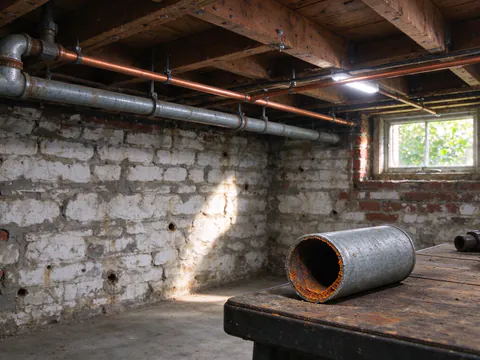
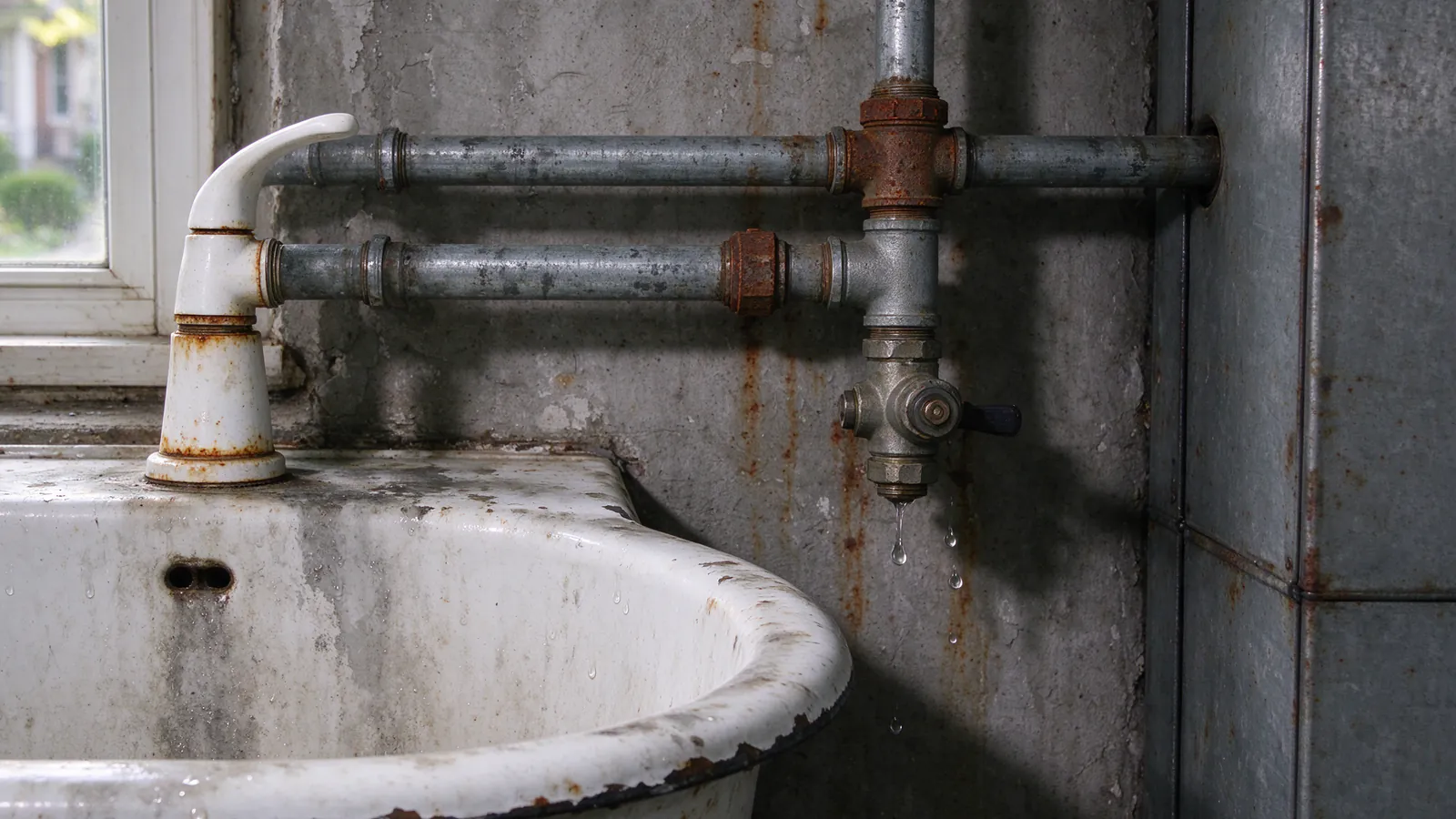
Galvanized steel is iron pipe coated with zinc. Once the coating wears through, the iron rusts on the inside wall, and layers of rust and mineral scale build up and narrow the bore. Water sitting in that pipe overnight picks up rust, so the first draw in the morning runs brown and then clears. Flow changes, such as a shutoff for a repair, break loose more scale. Hot lines corrode faster than cold, so the hot side often shows it first.
Galvanized has a second issue that matters more than color. The Philadelphia Water Department explains that, over decades, lead from a property’s plumbing can accumulate on the corroded walls of galvanized pipe and come loose later. Discolored water from galvanized does not mean there is lead in it, and clear water does not mean there is none. Only a test shows what reaches the tap. PWD’s lead information pages explain how to request one, and the lead in Philadelphia tap water guide covers what the results mean.
PWD adds zinc orthophosphate to its water, which forms a protective coating inside pipes and slows new corrosion. It does not remove scale already built up in old galvanized steel.
The water heater
A tank water heater collects sediment at the bottom, and its steel tank is protected by a sacrificial anode that wears away over the years. Once the tank itself starts to rust, hot water runs discolored at every hot tap while the cold stays clear. Sediment stirred up when the heater refills can do the same in brief bursts. The heater’s age, the color of water drained from its valve and whether the cold side is clear usually settle it. Heater replacement is its own job; the Philadelphia repipe permit guide notes the copper connections L&I requires at the heater when the piping around it is replaced.
Finding the source, step by step
- Run the cold water at the tap closest to the meter, usually the laundry tub or the basement hose bibb. If it is discolored there, the source is at or before the meter.
- Ask a neighbor or check whether there has been water main work on the block.
- Compare hot and cold at a kitchen or bathroom tap.
- Note whether the color clears after a minute or two of running, and whether it is worst in the morning or after a shutoff.
- Identify the pipe leaving the meter. The guide to identifying your water pipes shows how.
When a repipe is the answer
If the discoloration is inside the house, comes from galvanized pipe and comes with weak flow upstairs, the pipe is the problem, and replacing it removes both symptoms at the source. If the water is discolored at the meter, or only on the hot side, a repipe will not fix it. The low water pressure guide covers the flow side of the same diagnosis.
Philadelphia Freedom Repipe replaces corroded galvanized supply piping after a walk-through from the meter that identifies where the color is coming from. The old water pipes guide explains the wider picture, and the who owns the water line guide explains who is responsible for the line from the street.